Filed an Extension This Year? Here's Why (and How to Make It Your Last)
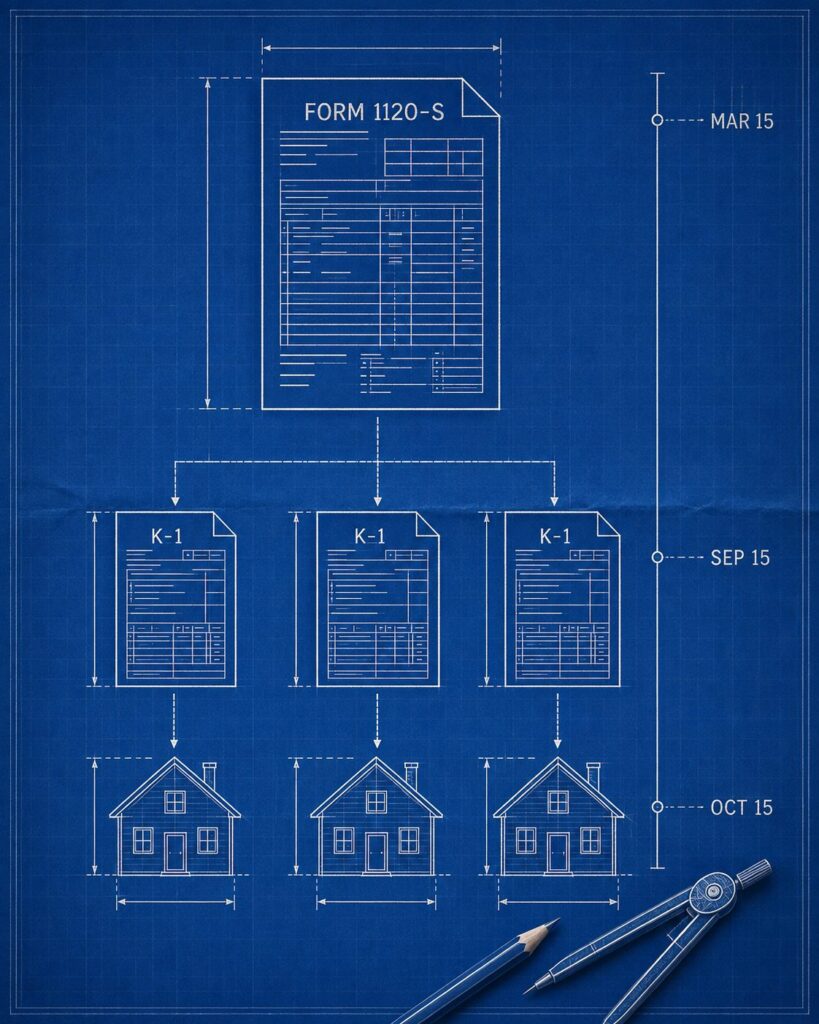
If your S-corp or partnership return is due on September 15, you filed an extension back in March. An extension sounds like a tax strategy. “We’re on extension” has a certain professional ring to it. Most of the time, it means exactly one thing: the books weren’t ready.
We run an accounting firm, and we’ll be honest about our own extension list. Very little of it was ever there for a tax reason. There was no exotic election, no late-arriving form that justified it. The bank accounts weren’t reconciled. A pile of transactions was sitting in “Uncategorized.” A loan refinanced in June was never re-booked. The money moved between two LLCs was a mystery to everyone, including the owner. Nobody can answer questions about June in March, so the return waited.
What the extension actually costs you
It’s an extension to file, not to pay. If the estimated payment in March or April was short, the interest and penalty clock started then and has been running all summer. The extension didn’t pause it.
The K-1 cascade. Your business return is late, so your K-1 is late, so your personal return is late. Your business partner’s return is late. Their spouse’s return is late. One late close turns into three or four extended households, all filing in October, all a little annoyed.
Everyone who asks for your return. The lender doing the refinance wants the filed return. The buyer’s due diligence team wants it. The bank line renewal wants it. “We’re on extension” is a sentence you end up saying to the people who decide your interest rate.
Decisions made blind. If the books weren’t closed enough to file in March, they weren’t closed enough to run the business on in May, July, or today. Pricing, hiring, and equipment decisions got made on numbers nobody trusted.
Why it happened
The extension wasn’t a tax decision. It was a bookkeeping outcome. A return is only a summary of twelve closed months. If the months weren’t closed, there was nothing to summarize, and “we’ll catch it up over the summer” is a plan that has never once worked.
What “closed” means
A month is closed when all of this is true:
- Every bank and credit card account is reconciled to the statement. Not “the feed is caught up.” The ending balance ties to a document.
- Nothing is sitting in Uncategorized or “Ask My Accountant.” Those accounts are next year’s extension list.
- Loan balances match the lender’s statement, and any new equipment or property has the invoice or settlement statement behind it.
- Owner activity is booked as what it is. Distributions, contributions, the personal charge you ran through the business card, the transfer from the operating company to the real estate LLC. Booked the month they happen, not reconstructed from memory nine months later.
- Receipts are attached the day the money is spent, not hunted down in March.
Do that twelve times and the return is a byproduct. It gets filed in February. No extension, no cascade, no awkward conversation with the bank.
What to do in the next 13 days
- Send your accountant everything they’ve been asking for since June. Today. The missing statement, the loan payoff letter, the answer to “what was this $4,200 charge.” The September 15 return is built from those answers.
- Ask about the estimate. If you owe, paying now stops the interest clock even before the return is filed.
- Ask one more question: “What would it take to close my books every month?” That conversation is the one that makes this your last extension.
Where we come in
Monthly close is the core of what we do for our clients: reconciled accounts, a clean balance sheet, owner activity booked correctly, and a report you can actually make decisions on, every month. The businesses we serve this way file in February and spend September doing something else. If you’d like this September to be your last one on extension, reach out. The conversation is free, and if all you need is a monthly close, we’ll tell you that.